
- Bestseller
- New Arrival
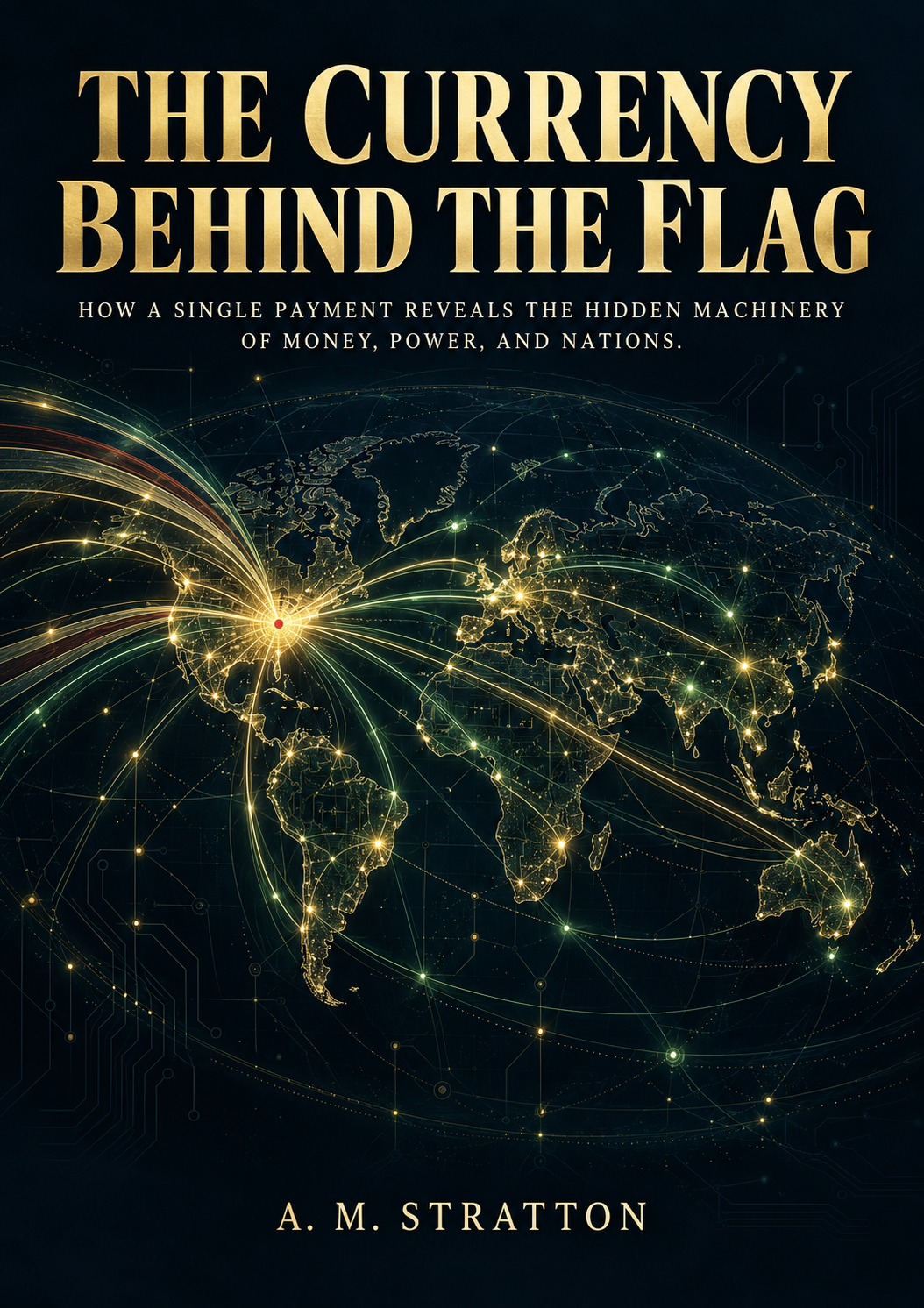
The Currency Behind the Flag
Topic: Global Politics
$7.99
Read for free with Aureum Premium
$9.99/month · Cancel anytime after 3 months
Short Description:
Every day, trillions of dollars cross borders without a single banknote changing hands. This narrative nonfiction guide to global finance follows one $42,300 coffee payment from a Kenyan cooperative to a Hamburg roastery, revealing the hidden machinery behind it: SWIFT, correspondent banks, exchange rates, and the dollar’s quiet dominance. It then shows how that same system becomes a weapon through sanctions, and what challengers are building to replace it. No finance background required.
Book Details
Pages
165
Language
English
Published
June 2026
Publisher
amacox
ISBN
Book Details:
Follow a single coffee payment from Kenya to Germany, and you’ll find the entire architecture of global power hiding inside it. The Currency Behind the Flag opens with $42,300, an ordinary invoice, and two people who will never touch a dollar bill: a coffee cooperative manager in Kiambu County and a roastery owner in Hamburg. Their money still has to cross an ocean of correspondent banks, sanctions screens, and currency conversions before either woman sees a shilling or a euro land in her account — and every step of that journey belongs, in ways neither of them chose, to the United States.
This is a book about how money actually moves, why the dollar ended up running the whole show, and what happens when that same machinery gets turned into a weapon — freezing a central bank’s reserves, cutting a country off from the world’s banks overnight, catching honest businesses in the blast radius of sanctions meant for someone else. It’s also about the countries now trying to build a way around it, and whether they can. You don’t need a finance degree to read this. You need only the same question Amara and Lena’s invoice keeps asking: whose currency is this, really, and who gets to decide? Start following the money.
About the author
Meet A. M. Stratton
A. M. Stratton grew up in Valparaíso, Chile, a port city where container ships and hillside homes shared the same view. He studied international economics at Erasmus University Rotterdam, then spent twelve years in correspondent banking and trade finance, watching payments cross borders and, occasionally, stall at a compliance screen. He now lives in Ghent, Belgium, a short train ride from SWIFT's headquarters. Writing came late and out of frustration. Colleagues could explain a wire transfer, yet news coverage of sanctions and currency crises assumed knowledge almost nobody outside the industry has. His first drafts were too technical, and learning to cut jargon without cutting truth took years.
Stratton writes to make hidden systems visible. His ideas begin as questions overheard at work, and he checks every claim against primary sources such as the IMF and the Bank for International Settlements. He wants readers to feel curious and clear-headed, never lectured. Away from the desk, he rereads Barry Eichengreen, walks Ghent's canals before dawn, and keeps a notebook of unanswered questions. A former settlements clerk taught him that every number is a person waiting, a belief that shapes every page. His personal rule: understand the machinery before judging it.
